How Botox® Works and Why Your Injector Matters

How Botox® relaxes the muscles behind expression lines, what the research says about timing and results, and why an experienced injector makes the difference.
Questions after reading? Tell us what you're curious about and we'll call you.
Prefer to talk? Call (303) 465-6332 · Book online
We never share your information. Please do not include medical details.
Botox® Cosmetic (onabotulinumtoxinA) softens frown lines, forehead lines and crow's feet so you look rested and refreshed, not "done." It works by relaxing the specific muscles that crease your skin, and the result you get depends heavily on the skill of the person injecting it. Here is how Botox® actually works, and why choosing an experienced injector is one of the most important decisions you will make.
Botox® is a purified protein made from the bacterium Clostridium botulinum. In the tiny, targeted doses used cosmetically, it is a well-studied neuromodulator, not a filler. Dermal fillers add volume beneath the skin; Botox® relaxes specific muscles so they stop creasing the skin above them (Small, 2014).
The lines that respond best are dynamic wrinkles, the ones that appear when you frown, squint or raise your eyebrows. Over years of repeated muscle movement, the skin above those muscles folds and eventually etches into visible creases (Small, 2014).
When Botox® is injected into a muscle, it travels to the nerve endings that tell that muscle to contract. There, it blocks the release of acetylcholine, the chemical messenger that triggers movement. It does this by cleaving a protein called SNAP-25, which nerve endings need to release that messenger (Small, 2014). With the signal interrupted, the muscle relaxes and the skin above it smooths out (Camargo et al., 2021).
A few practical points follow from how it works:
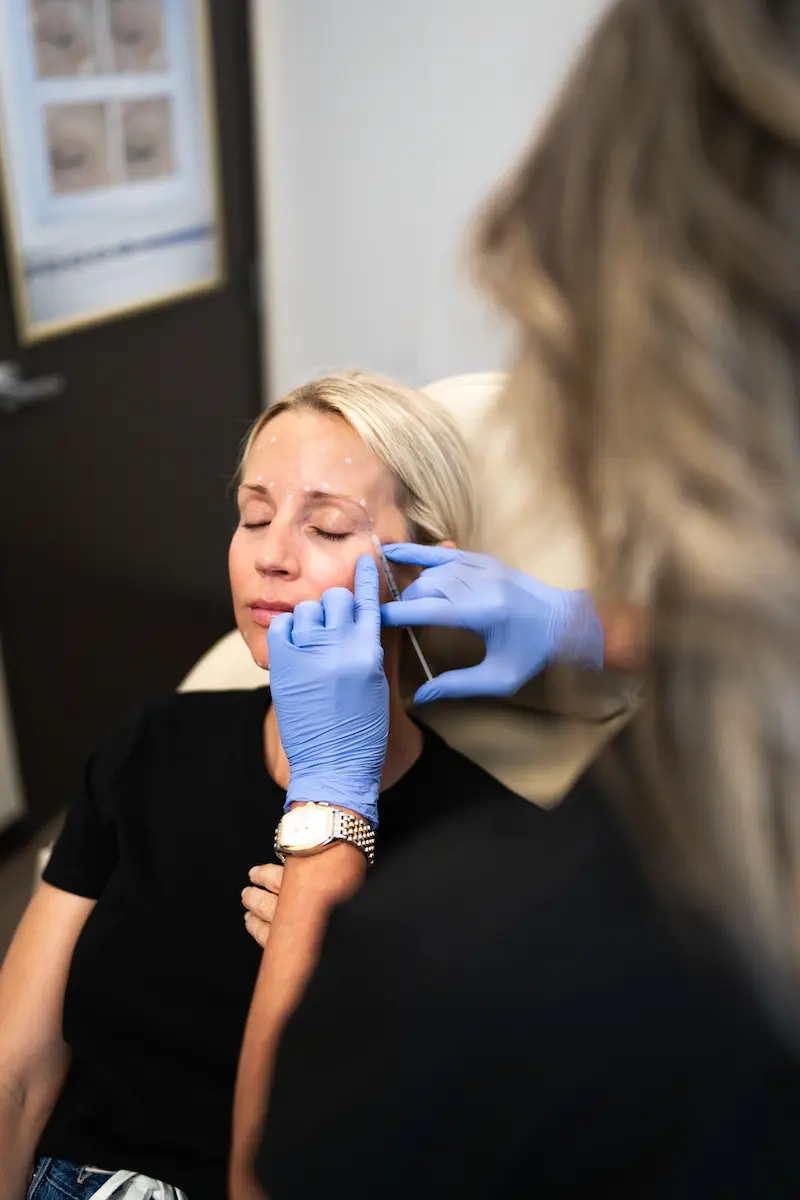
Botox® is often described as quick and easy, which hides how much skill separates a natural result from an obvious or disappointing one. The injections take minutes, but knowing exactly where, how deep and how much to inject takes training and experience.
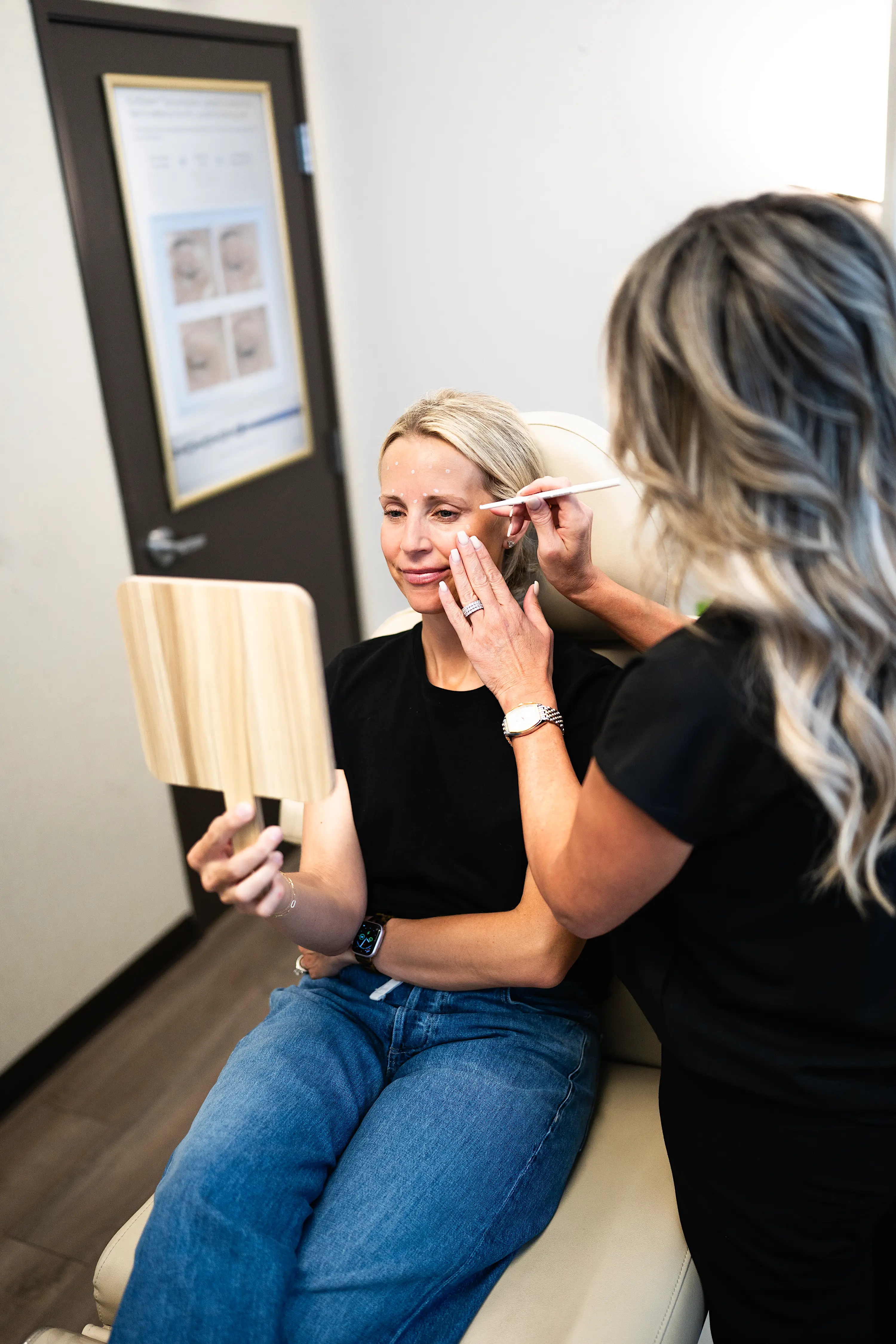
Muscle size, muscle strength, brow position and natural asymmetry vary from person to person. Standard dosing guides are only a starting point; injection points should be tailored to each face by studying the muscles at rest and in motion (Blumenfeld et al., 2017). A deep understanding of facial anatomy is considered essential for the best result (Camargo et al., 2021). That is why every Botox® plan at Allied is personalized to your face, your goals and your budget.
The side effects people worry about most, a drooping eyelid or a heavy, lowered brow, are largely technique-dependent. They are usually caused by product placed too low or in the wrong muscle, and they become less common as injector skill improves (Small, 2014). Botox® is also not right for everyone. It should not be used in people with certain neuromuscular disorders such as myasthenia gravis, an allergy to the product, a tendency toward keloid scarring or body dysmorphic disorder, so a careful injector screens for these first (Small, 2014).
In a large real-world registry of botulinum toxin treatment for muscle conditions, more experienced injectors achieved significantly higher patient satisfaction and better results than less experienced ones (Esquenazi et al., 2017). The artistry of balancing muscles against one another so your face still moves naturally comes with training and volume.
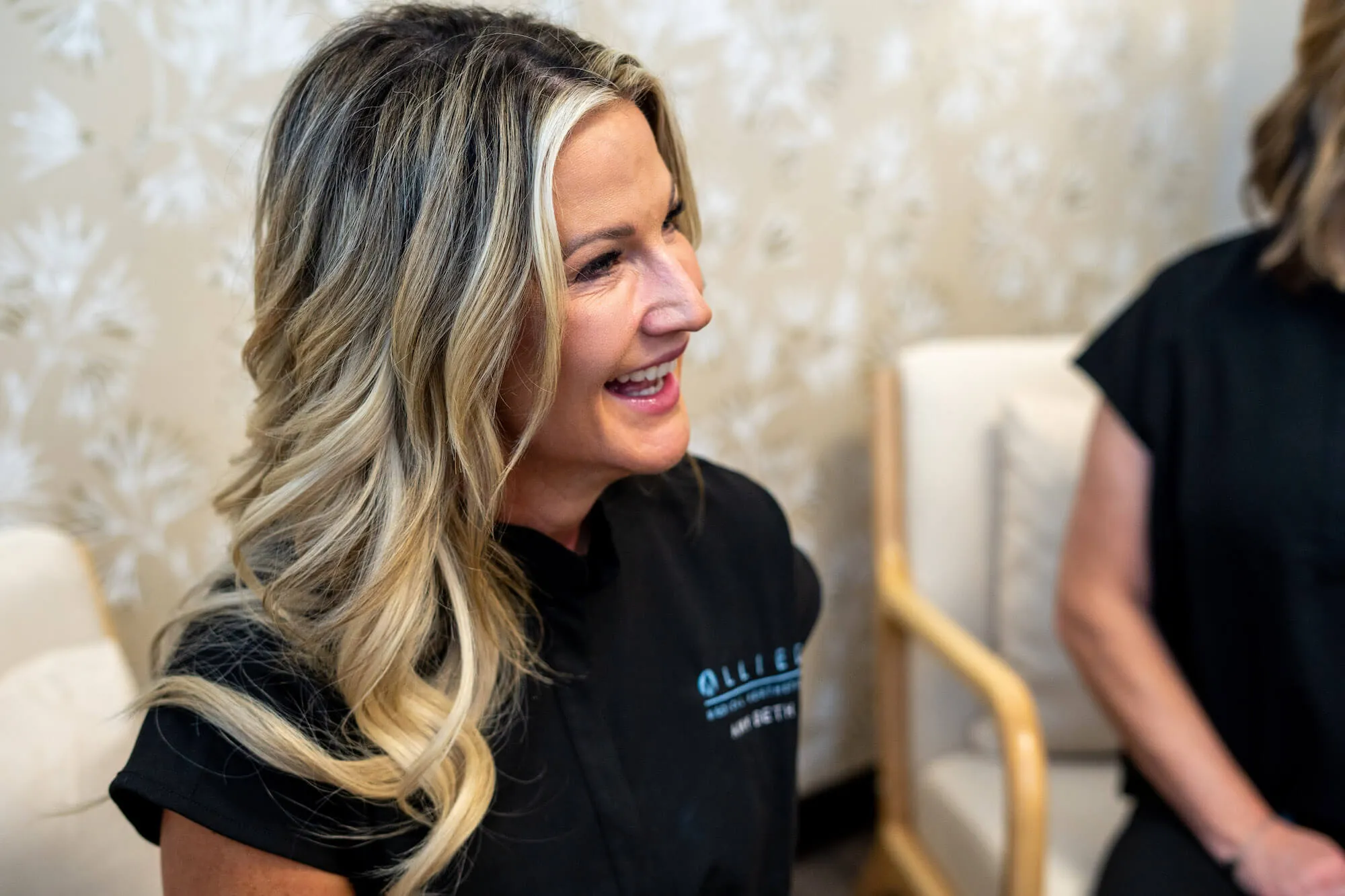
At Allied Medical Aesthetics, Botox® is performed by our named, credentialed injectors: founder Amy Beth, LMA, a three-time Master Expert Certified Injector; Richelle, RN, an Aesthetic Nurse Injector; and Melody, LMA, a Licensed Medical Aesthetician and Aesthetic Injector. Our practice is ranked by Allergan Aesthetics in the top 1% of Botox® Cosmetic practices nationally.
A good Botox® visit is methodical, not rushed. Here is what to expect from an experienced provider. For a full first-visit walkthrough, see your first Botox® appointment, step by step.
Botox® blocks the nerve signal that makes specific facial muscles contract. When those muscles relax, the skin above them stops creasing and lines soften.
Effects build gradually. Full results usually appear within about two weeks, which is the best time to evaluate them.
Studies report about three to six months. Most of our clients enjoy results for three to four months before movement gradually returns.
Every face has different muscle size, strength and symmetry. An experienced injector tailors placement and dose to your anatomy, which gives a more natural result and lowers the risk of a drooping brow or eyelid.
People with certain neuromuscular disorders, an allergy to the product, keloid-prone scarring or body dysmorphic disorder should not be treated, and it is not given during pregnancy or breastfeeding. Your provider reviews your health history before treatment.
Botox® works through a well-understood, reversible mechanism, but the medication is only as good as the person injecting it. Choose a qualified, experienced injector, expect a real consultation and facial analysis, and treat your face as the individual it is. Learn more about Botox® at Allied or call (303) 465-6332 to book a free consultation at our Westminster office, 2751 W 120th Ave #200. New patients can see our current new patient specials.
This article is for general education and is not a substitute for individual medical advice. Talk with a qualified provider about your treatment.